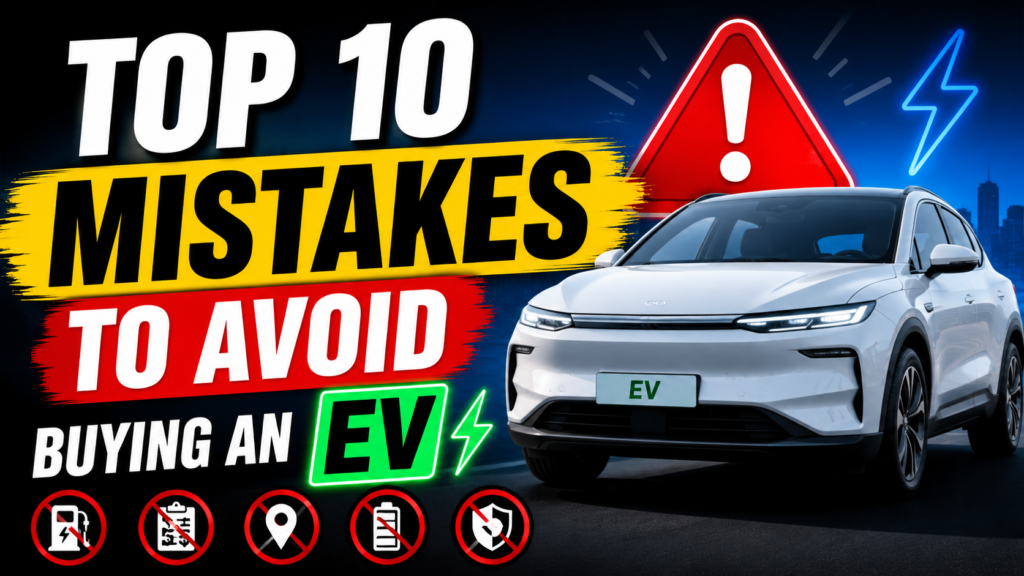
Top 10 Mistakes to Avoid While Buying an EV
By Kaushik Brahmakshatriya
Published On 09 July 2026.
Mistakes to avoid while buying an EV
Electric vehicles are becoming the preferred choice for buyers who want lower running costs and a cleaner commute. But EV technology works very differently from petrol or diesel cars, and many first-time buyers end up making costly errors. Here are the top 10 mistakes you should avoid before signing that booking form.
1. Ignoring Real-World Range vs Claimed Range
Manufacturers often advertise range figures tested in controlled lab conditions. Actual range drops due to AC usage, traffic, terrain, and driving style. Always check independent reviews for real-world figures instead of relying only on brochure numbers.
2. Not Checking Home Charging Feasibility
Many buyers assume charging an EV is as simple as plugging in a phone. Without a dedicated parking spot, proper wiring, and electrical load sanction, home charging can become a daily headache.
3. Overlooking Public Charging Infrastructure
Before buying, check how many charging stations exist along your regular routes. A great car with poor charging access nearby can turn long drives into a stressful experience.
4. Underestimating Battery Degradation
Batteries lose capacity over time. Buyers who skip questions about battery warranty, degradation rate, and replacement cost often face surprises after 4–5 years of ownership.
5.Choosing Based on Price Alone
The cheapest EV in a segment may compromise on range, safety rating, or after-sales support. Comparing only sticker price without total cost of ownership is a common and expensive mistake.
6. Skipping a Test Drive in Real Conditions
An EV should be tested on highways, city traffic, and inclines — not just a short showroom loop. Regenerative braking feel and cabin noise vary significantly across models.
7. Ignoring Service Network Availability
EV service centers are still limited in many cities compared to traditional car brands. Check service center distance and average turnaround time before purchase.
8. Not Comparing Insurance and Running Costs
EV insurance premiums and spare part costs can differ significantly from petrol cars. Skipping this comparison leads to underestimating annual ownership expenses.
9. Forgetting to Check Resale Value Trends
The EV resale market is still evolving, and depreciation patterns differ by brand and battery chemistry. Research resale trends instead of assuming EVs hold value like conventional cars.
10. Overlooking Software and Update Support
Modern EVs rely heavily on software for range optimization, safety features, and infotainment. Buyers who ignore over-the-air update support may miss out on long-term improvements.
Quick Comparison: Key Buying Factors
| Factor | What to Check | Why It Matters |
| Range | Real-world tested range | Avoids range anxiety on daily commute |
| Charging | Home + public charger access | Impacts daily convenience |
| Battery Warranty | Years/km coverage & degradation clause | Protects against costly replacement |
Cost Comparison Snapshot
| Cost Component | Petrol Car (Approx.) | EV (Approx.) |
| Fuel/Charging per month | Higher | Lower |
| Maintenance per year | Moderate | Lower |
| Insurance premium | Standard | Slightly higher |
Frequently Asked Questions (FAQ)
Q1. What is the biggest mistake EV buyers make?
Relying only on claimed range figures instead of checking real-world performance is the most common and costly mistake.
Q2. Is home charging necessary before buying an EV?
It is highly recommended, as it ensures convenient daily charging without depending entirely on public infrastructure.
Q3. Does EV battery degrade over time?
Yes, all lithium-ion batteries degrade gradually. Checking warranty terms helps protect against unexpected replacement costs.
Q4. Are EVs costlier to insure than petrol cars?
In many cases, EV insurance premiums are slightly higher due to battery and component costs.
Q5. Should resale value affect my EV buying decision?
Yes, since EV resale trends are still developing, researching depreciation patterns helps in making an informed long-term decision.
Disclaimer :
Information on this auto blog is for general purposes only. Prices, features, and specifications may change without notice. Please verify details with the official dealer or manufacturer before making any purchase decision. We are not responsible for any loss based on this informational.



Leave a Reply