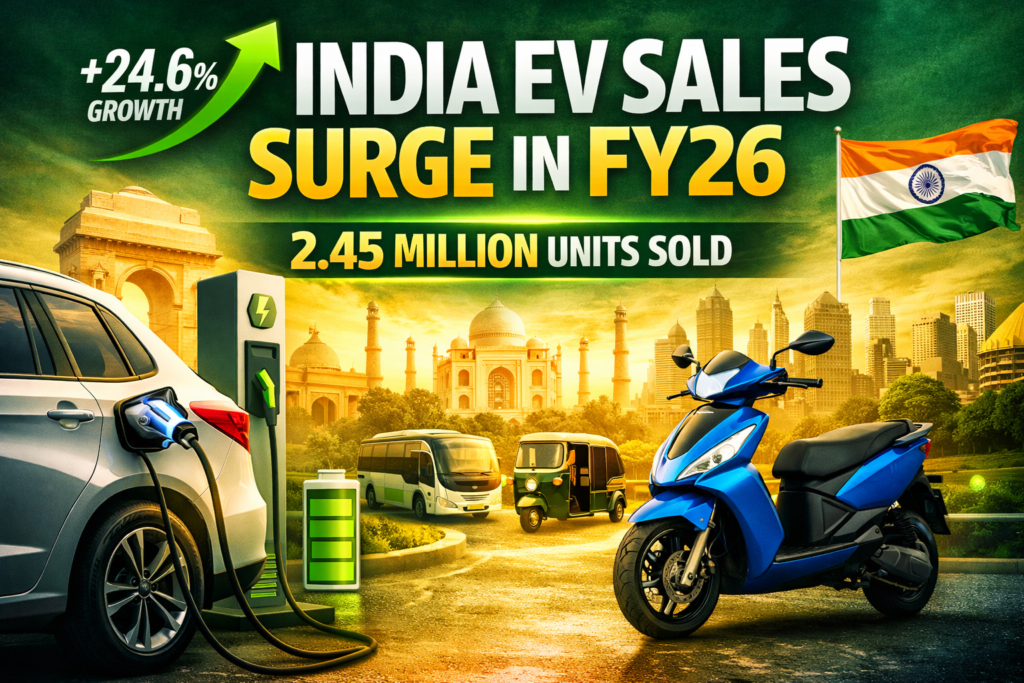
India EV Sales Boom in FY26: 24.6% Growth Signals Rapid Shift Toward Electric Mobility
By Kaushik Brahmakshatriya
Published On 07 April 2026.
India’s transition toward clean and sustainable transportation is accelerating at an impressive pace. In the financial year 2025–26 (FY26), electric vehicle (EV) sales in the country surged by 24.6%, reaching approximately 2.45 million units. This strong performance highlights how EVs are steadily becoming a preferred choice among Indian consumers.
With rising environmental awareness, supportive government policies, and rapid technological innovation, the EV industry in India is entering a high-growth phase. This article provides a fresh, SEO-optimized perspective on the latest EV sales trend, key growth drivers, challenges, and future outlook.
A Milestone Year for Electric Vehicles in India
FY26 has emerged as a landmark year for India’s EV ecosystem. The 24.6% growth in sales reflects not only increasing consumer confidence but also the maturity of the market. Electric mobility is no longer limited to early adopters—it is now gaining traction across a wide spectrum of users, from daily commuters to commercial fleet operators.
This growth is especially significant considering the global push toward reducing carbon emissions and India’s commitment to sustainable development.
What’s Driving the EV Growth in India?
1.Increasing Cost of Conventional Fuels
Petrol and diesel prices have remained volatile, prompting consumers to explore alternatives. EVs offer a cost-effective solution due to their lower running and maintenance expenses, making them attractive for long-term savings.
2.Strong Government Support
Government initiatives have been a major catalyst in accelerating EV adoption. Financial incentives, tax benefits, and subsidies have reduced the price gap between electric and traditional vehicles. Policies encouraging domestic manufacturing have also strengthened the ecosystem.
3.Better Charging Infrastructure
Charging infrastructure in India has improved significantly in recent years. Metro cities and major highways are seeing a steady increase in public charging stations, helping reduce concerns related to driving range.
4.Improved Technology and Features
Modern EVs come with enhanced battery life, faster charging capabilities, and smart connectivity features. These improvements have made electric vehicles more practical and appealing to a wider audience.
Segment Performance: Where the Growth Is Happening
Electric Two-Wheelers Lead the Market
Electric scooters and bikes continue to dominate the EV segment in India. Their affordability and convenience for daily commuting make them the top choice for urban consumers.
Electric Three-Wheelers Expanding Rapidly
E-rickshaws and cargo EVs are gaining popularity in smaller cities and towns. These vehicles are widely used for passenger transport and last-mile delivery services.
Passenger EVs Gaining Momentum
Although still a smaller segment, electric cars are seeing steady growth. Improved model availability and increased awareness are encouraging buyers to consider switching from petrol or diesel vehicles.
Commercial EV Adoption Rising
Businesses and logistics companies are gradually integrating EVs into their fleets to reduce fuel costs and meet sustainability goals.
Role of Innovation and Private Investments
The EV boom in India is also fueled by strong participation from private players and startups. Companies are investing in:
* Battery innovation and local production
* Charging network expansion
* Digital platforms for EV management
New business models such as battery leasing and subscription-based ownership are making EVs more accessible to a broader audience.
Challenges That Still Need Attention
Despite the impressive growth, certain hurdles remain:
Limited Charging Coverage: Rural and remote areas still lack adequate charging infrastructure.
Higher Upfront Costs: Initial purchase prices of EVs can be higher compared to conventional vehicles.
Battery Supply Chain Issues: Dependence on imports for battery materials affects cost and availability.
Consumer Awareness Gap: Many potential buyers are still unfamiliar with EV benefits and usage.
Environmental Benefits of EV Adoption
The rise in EV usage is a positive step toward reducing air pollution and carbon emissions. With transportation being a major contributor to pollution in India, widespread EV adoption can significantly improve urban air quality.
However, long-term sustainability will depend on clean energy sources for charging and efficient recycling of batteries.
Future Outlook: What Lies Ahead for India’s EV Market
India’s EV journey is just getting started. The coming years are expected to bring:
* More affordable EV options for mass consumers
* Expansion of fast-charging infrastructure
* Increased local manufacturing of batteries
* Stronger adoption in public transport systems
With continued innovation and policy support, India is well-positioned to become a global leader in electric mobility.
Final Thoughts
The 24.6% growth in EV sales during FY26 is a clear indication that India is moving steadily toward a cleaner and more sustainable transportation future. As awareness grows and infrastructure improves, electric vehicles are set to become an integral part of everyday life.
For consumers, businesses, and policymakers alike, this is the perfect time to embrace the EV revolution and contribute to a greener tomorrow.
Disclaimer :
The information on this auto blog is for general purposes only. Prices, features, and specifications may change without notice. Please verify details with the official dealer or manufacturer before making any purchase decision. We are not responsible for any loss based on this information



Leave a Reply