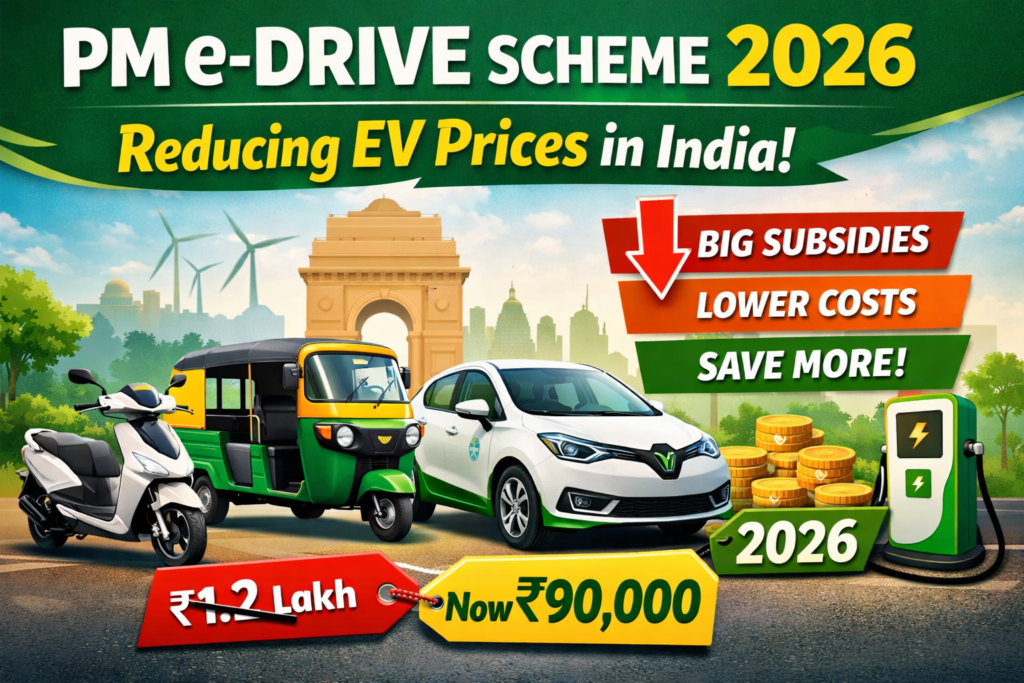
PM e-DRIVE Scheme 2026: How It Is Reducing Electric Vehicle Prices in India
By Kaushik Brahmakshatriya
Published On 14 April 2026.
India is rapidly moving toward electric mobility, and the PM e-DRIVE scheme is playing a crucial role in making electric vehicles (EVs) more affordable. Launched as a next-generation initiative to boost EV adoption, this scheme focuses on lowering vehicle costs, supporting local manufacturing, and improving accessibility for everyday buyers.
Understanding the PM e-DRIVE Scheme
Understanding the PM e-DRIVE Scheme
The PM e-DRIVE (Electric Drive Revolution in Innovative Vehicle Enhancement) scheme is designed to replace earlier EV subsidy frameworks with a more targeted and efficient system. Its main objective is to reduce dependency on fossil fuels and promote eco-friendly transportation.
The scheme covers:
* Electric two-wheelers (e-scooters and bikes)
* Electric three-wheelers (autos and cargo vehicles)
* Electric buses for public transport
* Selected private electric cars
Key Ways the Scheme Lowers Vehicle Prices
1.Direct Purchase Subsidy
The government offers incentives based on battery capacity (kWh), directly reducing the purchase price.
📊 Example Figure: Subsidy Impact
Subsidy range: ₹10,000 to ₹50,000 (depending on vehicle type)
2.Electric scooter price drop: Up to 20–25%
Electric auto price reduction: Around 15–18%
This makes EVs significantly more affordable compared to previous years.
3.Improved Affordability for Middle-Class Buyers
With reduced upfront costs, EVs are no longer limited to premium buyers.
📊 Average Price Comparison (2026 Estimates)
Vehicle Type
Petrol/Diesel Price
EV Price Before Scheme
EV Price After Scheme
Scooter
₹90,000
₹1.20 lakh
₹95,000
Auto Rickshaw
₹3 lakh
₹3.5 lakh
₹2.9 lakh
Hatchback Car
₹6 lakh
₹10 lakh
₹8.8 lakh
4.Lower Running and Maintenance Costs
EVs already have lower operating costs, and the scheme further improves savings.
📊 Running Cost Comparison
Petrol vehicle: ₹6–₹8 per km
Electric vehicle: ₹1–₹1.5 per km
Over a year, an average user can save ₹30,000–₹60,000 depending on usage.
5.Support for Local Manufacturing
The scheme encourages Indian companies to manufacture EV components domestically.
📊 Industry Growth Estimates
Expected EV market growth: 35–40% annually
Battery cost reduction: 10–15% by 2027
Increase in local production: Up to 50%
This will further reduce vehicle prices in the coming years.
Who Benefits the Most?
The PM e-DRIVE scheme is especially beneficial for:
* Daily commuters using two-wheelers
* Auto drivers and small business owners
* Fleet operators and delivery services
* Budget-conscious car buyers
These groups can take maximum advantage of subsidies and low running costs.
Challenges to Keep in Mind
While the scheme offers major benefits, some factors may still affect EV pricing:
* Limited subsidy allocation (first-come, first-served basis)
* Fluctuating battery raw material prices
* Charging infrastructure expansion still in progress
However, government investments are expected to address these challenges soon.
Future Impact on EV Prices in India
The long-term outlook for EV pricing under the PM e-DRIVE scheme is highly positive:
* EV prices may match petrol vehicles by 2027–2028
* Wider adoption will reduce manufacturing costs
* Improved battery technology will increase efficiency and reduce prices
India is clearly heading toward a cost-effective and sustainable transportation system.
Conclusion
The PM e-DRIVE scheme is transforming the electric vehicle market by making EVs more affordable and practical for everyday users. With subsidies reducing upfront costs and long-term savings on fuel and maintenance, electric vehicles are becoming a smart investment in 2026.
If you are planning to buy a vehicle, this is the right time to switch to electric and take advantage of government incentives.
Disclaimer
The information on this auto blog is for general purposes only. Prices, features, and specifications may change without notice. Please verify details with the official dealer or manufacturer before making any purchase decision. We are not responsible for any loss based on this information



Leave a Reply