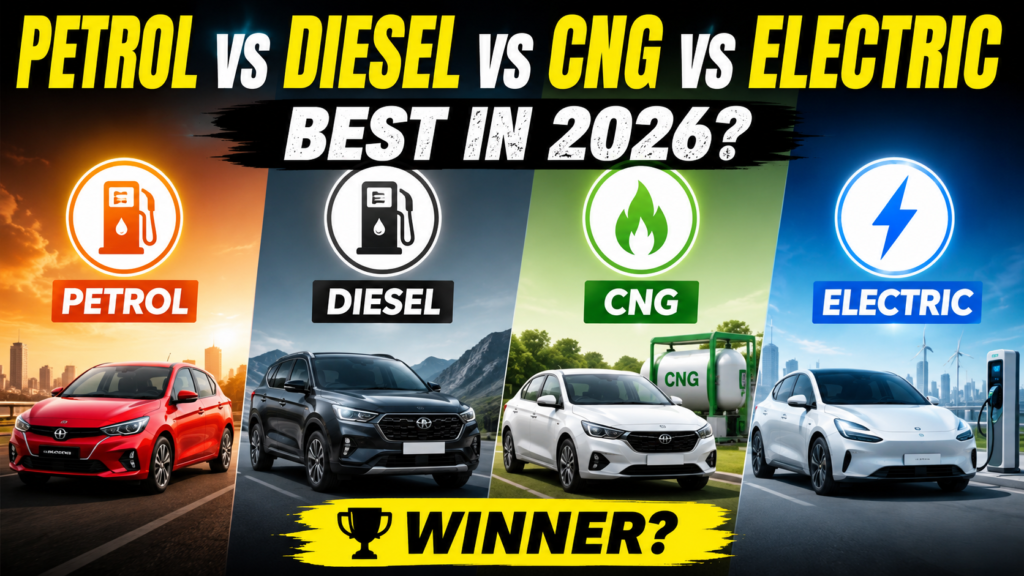
Petrol vs Diesel vs CNG vs Electric: Best Option in 2026
By Kaushik Brahmakshatriya
Published on 03 June 2026.
petrol vs diesel vs CNG vs electric 2026
Choosing the right fuel type in 2026 is more confusing than ever. With fuel prices fluctuating, EV charging networks expanding, and CNG stations growing across cities, buyers genuinely need clarity before their next car purchase. Each option brings its own strengths and trade-offs depending on driving habits, budget, and location.
Running Cost Comparison
Running cost remains the biggest deciding factor for most Indian buyers. Electric vehicles continue to offer the lowest per-kilometer cost, followed closely by CNG, while diesel and petrol remain the most expensive to run daily.
| Fuel Type | Approx. Cost per km | Best Suited For |
| Petrol | ₹5.5–6.5 | City driving, low annual mileage |
| Diesel | ₹4.5–5.5 | Highway travel, high mileage users |
| CNG | ₹2–2.5 | Daily commuters, cab/fleet owners |
| Electric | ₹1–1.5 | Urban users with home charging |
Beyond cost, performance characteristics vary significantly. Diesel engines still deliver strong torque for heavy loads and highways, petrol offers smoother refinement, CNG trades some power for savings, and electric motors provide instant acceleration but depend on charging infrastructure.
Performance and Practicality
| Factor | Petrol | Diesel | CNG | Electric |
| Refinement | High | Moderate | Moderate | Very High |
| Maintenance Cost | Moderate | High | Low-Moderate | Low |
| Boot Space Impact | None | None | Reduced (cylinder) | None |
| Range/Refuel Time | Good, quick refuel | Good, quick refuel | Moderate, quick refuel | Improving, slower charging |
Resale and Long-Term Ownership
Resale value trends have shifted in 2026. Diesel vehicles face stricter emission norms in several states, affecting long-term resale. Electric vehicles are gaining resale confidence as battery warranties improve, while CNG and petrol remain steady, dependable choices for budget-conscious buyers.
| Ownership Factor | Petrol | Diesel | CNG | Electric |
| Resale Trend | Stable | Declining in some cities | Stable | Improving |
| Emission Norm Risk | Low | Higher | Low | None |
| Ideal Ownership Period | 3–5 years | 5+ years (high mileage) | 3–5 years | 5+ years |
Which One Should You Choose?
If you drive mostly within city limits and have access to home charging, electric is now a genuinely practical choice in 2026. Daily commuters and fleet operators benefit most from CNG’s low running costs. Diesel still makes sense for those covering long highway distances regularly, while petrol remains the safest all-round choice for buyers wanting flexibility without infrastructure dependency.
Frequently Asked Questions
Q1. Is electric better than petrol in 2026?
For city driving with home charging access, electric vehicles offer lower running costs and better refinement. Petrol still wins on convenience and infrastructure availability.
Q2. Is CNG a good option for daily use?
Yes, CNG is ideal for daily commuters due to its low running cost, though boot space and highway performance are slightly compromised.
Q3. Should I still buy a diesel car in 2026?
Diesel remains suitable only for high-mileage users covering long highway distances regularly, given rising emission restrictions in many cities.
Q4. Which fuel type has the lowest maintenance cost?
Electric vehicles generally have the lowest maintenance cost due to fewer moving parts and no engine oil changes.
Q5. Is charging infrastructure ready for EVs in India in 2026?
Charging infrastructure has expanded significantly in metro and tier-2 cities, though rural and highway coverage is still developing.
Disclaimer :
The information on this auto blog is for general purposes only. Prices, features, and specifications may change without notice. Please verify details with the official dealer or manufacturer before making any purchase decision. We are not responsible for any loss based on this informational.

Related Posts


Leave a Reply