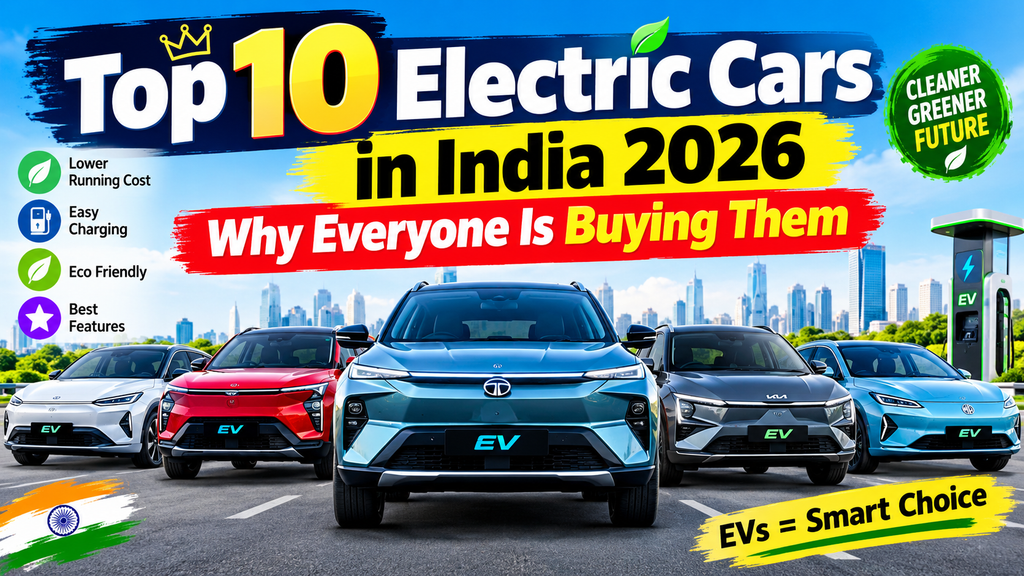
Top 10 Electric Cars in India 2026: Why Everyone Is Buying Them
By Kaushik Brahmakshatriya
Published On 06 October 2026.
Electric Cars In India :
Not too long ago, an electric car felt like a luxury experiment. Today, it is a practical choice for thousands of families. Petrol prices keep pinching, charging stations are spreading, and new models arrive almost every few months. If you have been wondering why so many people are switching, you are not alone. In this guide, I will explain why electric cars in India are selling fast, and which ten models buyers are choosing right now. So let’s get started.
The Biggest Advantage: Lower Running Costs
Ask any EV owner and the first thing they mention is the monthly bill. Charging at home usually costs a fraction of what petrol would for the same distance. A daily commuter driving 40 to 50 kilometres can save a decent amount every month, and that adds up over a few years. Servicing is also simpler because there is no engine oil, no clutch and fewer moving parts to wear out.
Another push comes from choice. Earlier, buyers had two or three options. Now there are hatchbacks, compact SUVs and premium models at different budgets. Add government support, lower road tax in many states and growing fast-charging networks, and it is easy to see why electric cars in India are no longer a niche idea. They are becoming a sensible everyday option.
10 Popular Electric Cars Buyers Are Choosing
Here is a simple comparison. Prices and range are approximate and change with variants and offers, so always confirm with your nearest dealer.
| Model | Price Band | Best For |
| Tata Tiago EV | Under ₹10 lakh | Budget city driving |
| MG Comet EV | Under ₹10 lakh | Short city trips |
| Tata Punch EV | ₹10–15 lakh | Small families |
| Tata Nexon EV | ₹12–18 lakh | All-round daily use |
| MG Windsor EV | ₹14–17 lakh | Comfort and space |
| Mahindra XUV400 | ₹15–18 lakh | Family highway trips |
| Tata Curvv EV | ₹17–22 lakh | Stylish SUV buyers |
| Hyundai Creta Electric | ₹18–24 lakh | Familiar brand fans |
| Mahindra BE 6 | ₹19–27 lakh | Performance lovers |
| BYD Atto 3 | ₹25–35 lakh | Premium feel |
You will notice that Tata and Mahindra dominate this list. The reason is simple: they offer real-world range, local service support and prices that suit Indian budgets. Buyers also like that most of these cars come with warranty on the battery.
Smart Tips Before You Book One
Buying an EV is a little different from buying a petrol car, so take your time. Start with your daily driving. If you travel under 60 kilometres a day, even a smaller battery will serve you well. For frequent highway trips, choose a bigger battery and check fast-charging points along your route.
Next, think about home charging. If you live in an apartment, ask your society about installing a charger before you pay the booking amount. A simple home setup makes ownership stress-free, because you can plug in at night and wake up to a full battery.
A quick word on battery care: avoid charging to 100 percent every single day unless you need the full range, and try not to run it down to zero regularly. Use the manufacturer’s recommended charger whenever possible. Small habits like these protect battery health and keep resale value strong when you decide to upgrade after a few years. Regular software updates and tyre pressure checks also help you get the best range every month.
Also compare battery warranty, resale support and service centre availability in your city. Take a proper test drive, because EVs feel very different from petrol cars with their instant pickup and silent cabin. Finally, check current state subsidies and offers, since they can change the final price noticeably. With these basics covered, owning one of the many electric cars in India becomes easy and enjoyable.
FAQ (Frequently Asked Questions )
Q 1. Which EV is best for a first-time buyer?
The Tata Tiago EV and MG Comet EV are popular starting points because of their lower prices and easy city driving
Q.2. How long does it take to charge an EV at home?
With a standard home charger, most cars take several hours for a full charge, so overnight charging works well.
Q 3. Are EVs really cheaper to maintain?
Yes, in most cases. There is no engine oil or clutch, so routine servicing costs are usually lower.
Q 4. Can I take an EV on long highway trips?
Yes, if you plan your route around fast chargers and choose a model with a larger battery.
Conclusion :
The shift towards clean mobility is real, and the numbers on the road prove it. Lower running costs, more model choices and better charging support are pushing buyers to take the leap. Whether you want a small city car or a premium SUV, there is something for every budget. If you are planning your next purchase, shortlist two or three models, test drive them, and decide calmly. The future of electric cars in India looks bright indeed for every buyer.
Disclaimer: This article is for general information only. Prices, range and features mentioned are approximate and may change. Please verify details with an authorised dealer before buying. We do not provide financial or purchase advice.


Leave a Reply