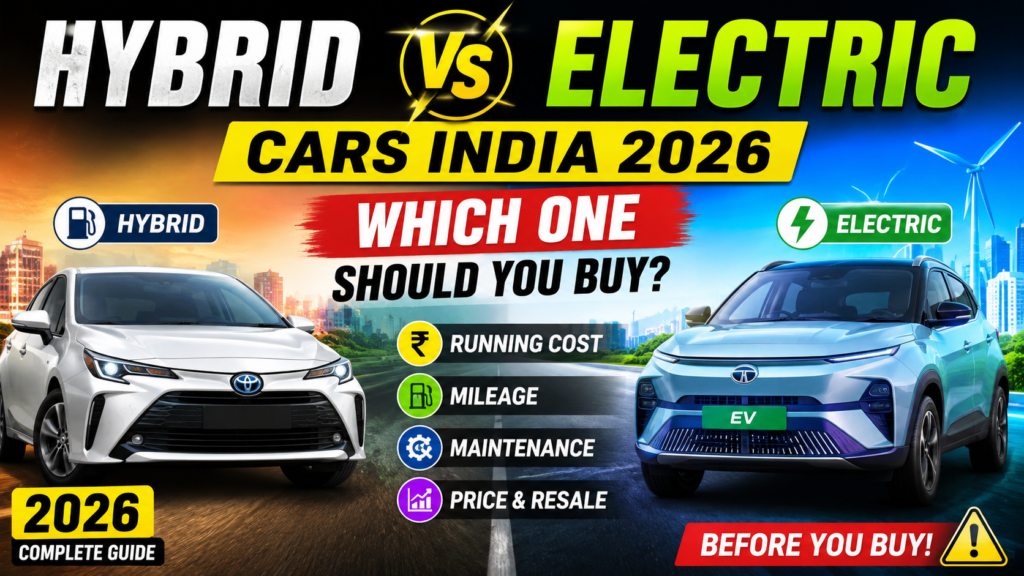
Hybrid vs Electric Cars India 2026: Which One Should You Buy?
By Kaushik Brahmakshatriya
Published On 25 August 2026.
Hybrid vs electric cars
The Indian auto market in 2026 is witnessing a fierce battle between hybrid vs electric cars, and buyers are more confused than ever. With rising fuel prices, better EV infrastructure, and new hybrid launches from Toyota, Maruti, and Honda, choosing the right technology has become a genuine dilemma. This blog breaks down the real difference between hybrid vs electric cars in terms of price, mileage, charging convenience, and long-term ownership cost, so you can make an informed decision before your next car purchase in India.
Hybrid vs Electric Cars: Key Differences Explained
A hybrid car uses both a petrol engine and an electric motor, switching between them or using both together to save fuel. There’s no need to plug it in; the battery charges itself through regenerative braking and the engine. An electric car (EV), on the other hand, runs purely on a battery pack and electric motor, requiring regular charging through a wall socket or charging station.
In India’s 2026 market, hybrids like the Toyota Hyryder, Honda City Hybrid, and Maruti Grand Vitara have gained massive popularity because they offer fuel efficiency without range anxiety. EVs like the Tata Punch EV, MG Windsor, and Mahindra BE 6 continue to attract buyers who have reliable home or office charging access.
Running Costs and Mileage: A Detailed Comparison
This is where the hybrid vs electric cars debate gets interesting. Hybrids typically deliver 25-28 km/l mileage, cutting fuel costs by nearly 40% compared to petrol cars. EVs cost roughly ₹1-1.5 per km to run on electricity, making them cheaper per kilometre than hybrids, provided you charge at home during off-peak hours.
However, EV owners in smaller cities still face charging infrastructure gaps, while hybrid owners enjoy the convenience of regular petrol pumps with zero range anxiety.
2026 Price, Maintenance Costs and Resale Value
Hybrid cars are generally priced ₹1.5-3 lakh higher than their petrol counterparts, while EVs carry a steeper premium due to battery costs, though this gap is shrinking with new affordable launches. Maintenance for hybrids is closer to conventional cars, whereas EVs need less frequent servicing but higher battery replacement costs after 8-10 years.
| Parameter | Hybrid Cars | Electric Cars (EV) |
| Fuel Type | Petrol + Electric Motor | Pure Battery/Electric |
| Average Mileage/Range | 25-28 km/l | 250-500 km per charge |
| Charging Needed | No | Yes (Home/Public Station) |
| Running Cost | Moderate | Low |
| Price Premium | ₹1.5-3 lakh | ₹3-8 lakh higher |
| Best For | Highway + City drivers | City-based daily commuters |
Frequently Asked Questions (FAQ)
Q1. Which is better for Indian roads, hybrid or electric cars?
Hybrids suit long-distance and highway drivers due to no charging dependency, while EVs work best for city commuters with home charging access.
Q2. Are hybrid cars more affordable than EVs in India?
Yes, hybrids currently cost less upfront than most EVs, though the price gap is narrowing in 2026.
Q3. Do EVs need more maintenance than hybrids?
No, EVs generally need less regular maintenance, but battery replacement can be costly long-term.
Conclusion
The hybrid vs electric cars decision in India ultimately depends on your driving habits, charging access, and budget. If you frequently travel long distances or lack reliable charging infrastructure, a hybrid remains the safer, more practical choice in 2026. But if you’re a city dweller with home charging facilities and want lower running costs plus a greener footprint, an EV makes more sense. Both technologies are rapidly evolving, so evaluate your daily driving pattern before making the final call.
Disclaimer
Information on this auto blog is for general purposes only. Prices, features, and specifications may change without notice. Please verify details with the official dealer or manufacturer before making any purchase decision. We are not responsible for any loss based on this informational.

Leave a Reply